8 Feb 2010
To keep obesity at bay, exercise discipline at the dinner table
By John McBeth, Senior Writer
FOR the life of me, I can't understand the attraction of The Biggest Loser, the Hallmark reality television show where grossly fat people compete to see how much weight they can lose - and then probably put it all back on later.
That's because I can't help thinking to myself how such young, able-bodied people could have become so overweight in the first place if they had eaten properly, played sport or even got off the couch occasionally.
The programme makes no real effort to explain that. Instead, we are treated to the spectacle of competitors with unbelievable rolls of fat sweating and straining to take off a few pounds each week.
I assume they were all given a prior medical check. But is it really good for people carrying that much weight to exert themselves in such a manner? Shouldn't they be doing some fast walking first?
'It must be morbid fascination, but I just like watching all those fat people,' says one of my friends, a slimly-built teacher and physical education instructor. 'Maybe it makes me feel better that I'm not as fat as that.'
Obviously, genes play a big role in determining a person's susceptibility to weight gain - but only up to a point, according to the World Health Organisation (WHO), whose figures on obesity are still less than comprehensive.
But with an estimated 300 million people worldwide now defined as clinically obese, WHO points the main finger of blame at 'energy-dense, nutrient-poor foods with high levels of sugar and saturated fats'.
The Biggest Loser Asia is the biggest eye-opener. The 16 initial contestants weighed in at a staggering 2,307kg, or an average of 144kg. Their average age was 30, with the youngest being 19 and the oldest 41.
What my teacher friend notices is that the Asians in the programme lack the work ethic of their American counterparts and tend to be the biggest whiners. The need to speak English means the contestants are relatively well educated and that in turn suggests a more privileged upbringing and all that that entails in Asia.
Many also have a broad American accent, which probably partly explains why they have a weight problem in the first place. There is also that thing in Asia about fat children being some sort of status symbol.
But the point is, only a few decades ago, one would have hardly seen a fat person in a region where skinny reigned supreme. What changed it all was economic growth - and with it, the explosion of American fast-food restaurants.
The only such outlet in Bangkok I can remember in the early 1970s was a small Kentucky Fried Chicken (KFC) joint on downtown Silom Road, with a big cut-out of Colonel Sanders standing on the potholed footpath outside.
It wasn't very popular with the Thais. In fact, back in those days rice was king and most Thais wouldn't even look at Western food. Why would they, when they have arguably the world's best cuisine?
Fast forward to 2003 and there are now 281 KFC outlets in Thailand - plus another 650 or more across Singapore, Malaysia, the Philippines and Indonesia. Then add the 750 McDonald's and 370 Pizza Hut outlets that have sprouted in the same four countries.
The year 2003 was also when the Thai Public Health Ministry disclosed that 33.8 per cent of Thai females and 31.5 per cent of males were obese - a remarkable 50 per cent increase in only five years.
Perhaps more troubling was a second study, based on a weight-to-height ratio, showing that obesity among five- to 12-year-old Thai children rose from 12.2 per cent to 16 per cent in just two years.
For all the fast-food temptations, Asians are still a lot thinner than their Western counterparts. More than 60 per cent of Americans, for example, are either overweight or obese, including 20 per cent of teenagers.
On one recent Biggest Loser show, a 212lb (96kg) American woman, tensely preparing to mount the scales, said she was worried that eating out with her friends on just one evening had undone her recent weight loss.
Why? Didn't she look at what she was eating? Hasn't anyone heard of a little discipline at the dinner table?
Most of us eat fast food occasionally. I hate to say it, but every six months or so, I get the urge for a KFC fix myself. But in my experience, the whole issue for children revolves around decent parenting.
I had to eat everything on my plate before I was allowed to leave the table. As a result, there is not a single vegetable I don't like - even those that I used to hate. In fact I'm sure I eat more vegetables than most so-called vegetarians. That is the result of the decent parenting my generation received.
But how many times have I sat down with a lot of my younger friends and watched their children simply refuse to look at anything grown in a garden. They don't know what they're missing.
Of course, we won't be discussing beer drinking in this column.
thane.cawdor@gmail.com
So what are the reasons for obesity to take place according to this article?
Monday, 8 February 2010

Wednesday, 27 January 2010
Introduction to Venice
 A
A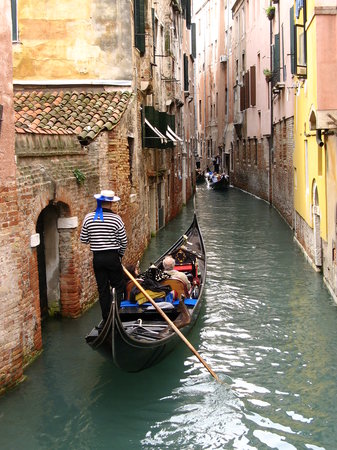 B
B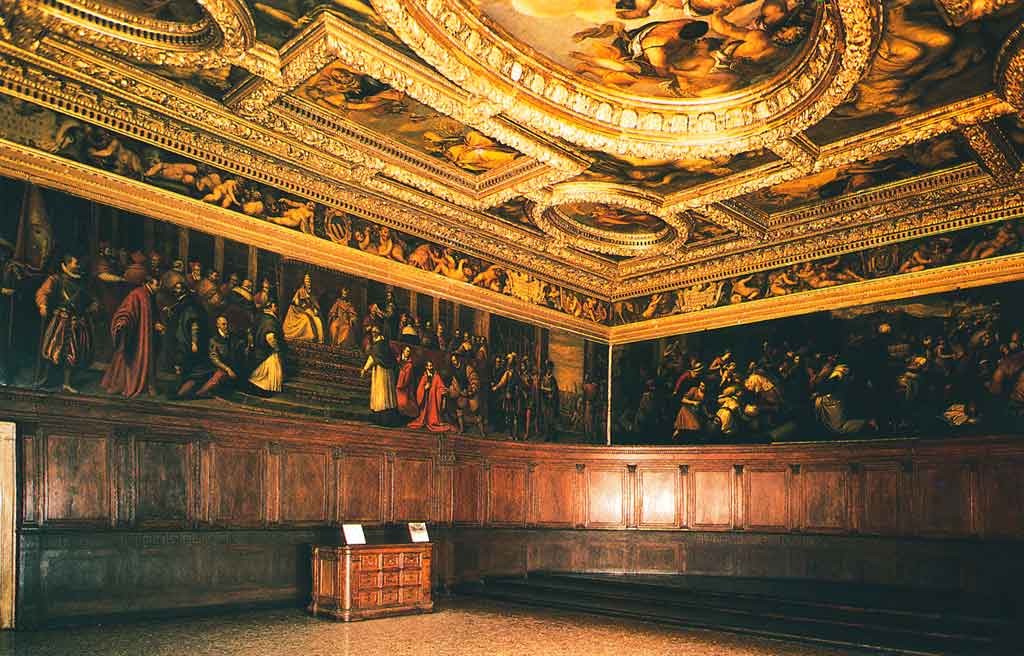 C
C D
D E
EDear 5N, before I start the topic on Venice, I would like to give you some ideas of how Venice is like. This is the map of Venice. Take a look and understand where is it located in the world.
Can you match the photos with the correct captions?
1. Council of Ten
2. Aerial of photo of Venice
3. Venetian Galley
4. Carnevale
5. Canal of Venice
Sunday, 24 January 2010
Nigeria paralysed by leadership crisis

STI 21 Jan 2010
President in Saudi hospital but deputy has limited powers to deal with Muslim-Christian clashes
ABUJA (NIGERIA): Nigeria, Africa's top oil producer and most populous nation, is paralysed by a power vacuum as its President lies bedridden in a hospital in Saudi Arabia.
Nigeria has been effectively without a president for almost two months since Mr Umaru Yar'Adua, a Muslim, flew to Saudi Arabia for treatment of a heart ailment. Because he did not temporarily hand authority to Vice-President Goodluck Jonathan, a Christian, his deputy cannot exercise full presidential powers.
'Our concern is that we're slipping into a constitutional crisis,' said Mr Rotimi Akeredolu, president of the Nigerian Bar Association.
It is an especially bad time for Nigeria to suffer a crisis of leadership, with violent clashes between Christian and Muslim mobs in the central city of Jos spreading to other parts of Plateau state.
About 300 people have died in the fighting, according to Muslim and Christian leaders and a paramedic, though there has been no official confirmation. Several hundred more have been reported wounded and some clinics were reportedly running out of medical supplies.
The unrest in Jos erupted on Sunday over plans to build a mosque in a mainly Christian district of the city riven by sectarian tensions for many years.
Mr Jonathan exercised his limited authority late on Tuesday, ordering extra troops to Jos to clamp down on the violence as soldiers and police enforced a 24-hour curfew.
But the uncertainty surrounding the presidency has raised fears that power in Nigeria could again fall into the hands of the military. Army officers have grabbed power six times since Nigeria gained independence from Britain in 1960, once sparking a civil war.
Mr Yar'Adua won the presidency after a disputed election in 2007. His inauguration marked Nigeria's first transfer of power from one civilian government to another.
Opposition and civic groups led by Nobel literature prize winner Wole Soyinka marched in Abuja last week to demand that Mr Yar'Adua relinquish office.
With more than 140 million people and 250 ethnic groups, Nigeria is roughly divided between a mainly Muslim north and largely Christian south. Violent eruptions linked to political, ethnic and sectarian divisions are common.
Allowing Mr Jonathan to replace Mr Yar'Adua may create new strains because of the policy of the ruling People's Democratic Party to alternate the presidency between the north and the south.
The handing of power to Mr Jonathan, a Christian Ijaw from the Niger Delta, may fuel tensions because a southerner would be finishing a northerner's term of office.
BLOOMBERG, AGENCE FRANCE-PRESSE
I don't know what happen to Blogger.. The functions for font size and font colour have gone missing. I will usually highlight the main points in red for you and my comments and questions in blue. Anyway, just bear with this for a while until Blogger trouble shoot these problems. The article above is related to 'Development' in Geography. Remember in Chapter 9, you learnt about physical reasons such as the presence of raw materials will help speed up development? The textbook gave the example of Nigeria is well-endowed with oil and could export this valuable raw material for money. However, most of the money was to develop the urban areas.
Now the situation is that Nigeria is also suffering from political instability because of the absence of leadership due to the President's illness. In addition, the country is now going through religious conflict between Christians and Muslims. Look at all the factors that are affecting development.
I told you that while in textbook, we learn about the different factors but in reality, usually more than one factor is influencing the situation.
Monday, 18 January 2010
The Hungry
Jan 18, 2010
Faces of the Haiti quake
PORT-AU-PRINCE: 'People are so desperate for food that they are going crazy,' said accountant Henry Ounche, in a crowd of hundreds who fought one another as US military helicopters clattered overhead carrying aid.
When other navy choppers dropped rations and Gatorade into a soccer stadium thronged with refugees, 200 youths began brawling and throwing stones to get at the supplies.
'We're hungry. We're hungry,' a group of boys on the side of the road implored a passing journalist on Saturday.
Much of the population of the city continues to sleep outside, with parks, streets, car lots and other sites turned into open-air dormitories.
Increasing numbers of Haitians were trying to cross the border into the Dominican Republic to the east, said the United Nations.
On a back street in Port-au-Prince, half a dozen young men ripped water pipes off walls to suck out the few drops inside. 'This is very, very bad but I am too thirsty,' said Mr Pierre Louis Delmar.
Outside a warehouse, hundreds of Haitians fell to their knees when workers for the agency Food for the Poor announced that they would distribute rice, beans and other supplies. Project director Clement Belizaire said: 'This was the darkest day of everybody living in Port-au-Prince.'
ASSOCIATED PRESS, WASHINGTON POST
5N, Today we just learnt about the factors affecting variations in food consumption. (ASA) Which factor do you think explains the cause for the above problem?
Faces of the Haiti quake
PORT-AU-PRINCE: 'People are so desperate for food that they are going crazy,' said accountant Henry Ounche, in a crowd of hundreds who fought one another as US military helicopters clattered overhead carrying aid.
When other navy choppers dropped rations and Gatorade into a soccer stadium thronged with refugees, 200 youths began brawling and throwing stones to get at the supplies.
'We're hungry. We're hungry,' a group of boys on the side of the road implored a passing journalist on Saturday.
Much of the population of the city continues to sleep outside, with parks, streets, car lots and other sites turned into open-air dormitories.
Increasing numbers of Haitians were trying to cross the border into the Dominican Republic to the east, said the United Nations.
On a back street in Port-au-Prince, half a dozen young men ripped water pipes off walls to suck out the few drops inside. 'This is very, very bad but I am too thirsty,' said Mr Pierre Louis Delmar.
Outside a warehouse, hundreds of Haitians fell to their knees when workers for the agency Food for the Poor announced that they would distribute rice, beans and other supplies. Project director Clement Belizaire said: 'This was the darkest day of everybody living in Port-au-Prince.'
ASSOCIATED PRESS, WASHINGTON POST
5N, Today we just learnt about the factors affecting variations in food consumption. (ASA) Which factor do you think explains the cause for the above problem?
Friday, 8 January 2010
'O' Level Results out on Monday
Dear 4E & 5N,
'O' Level results will be out on Monday at 2pm. A gentle reminder to wear your school uniform and no fanciful hairstyle or attire when you are collecting your results. An appeal to all of you to donate your old set of uniform if it is still in good condition to us if you do not want it. All the best and waiting for your good results! :-)
'O' Level results will be out on Monday at 2pm. A gentle reminder to wear your school uniform and no fanciful hairstyle or attire when you are collecting your results. An appeal to all of you to donate your old set of uniform if it is still in good condition to us if you do not want it. All the best and waiting for your good results! :-)
Monday, 4 January 2010
Tuesday, 1 December 2009
Subscribe to:
Posts (Atom)